

Trusted Keratoconus Treatment at Pixel Eye Hospital, Hyderabad
Blurred vision, changing glasses power, or irregular cornea? Get expert keratoconus diagnosis and advanced treatment to protect your vision early.
- ✓Advanced Diagnostics & Cornea Care
- ✓Expert Keratoconus Specialists
- ✓Comprehensive Treatment Plans
15+
Years of Specialist Expertise
5000+
Cornea Patients Treated
97%
Positive Patient Reviews


Are You Experiencing These Signs of Keratoconus?
Keratoconus often causes progressive blurred or distorted vision and may worsen over time if not monitored and treated properly.
- Blurred or distorted vision - Objects may appear stretched, ghosted, or unclear.
- Frequent spectacle power changes - Your glasses prescription keeps changing unusually often.
- Increasing light sensitivity - Bright lights may feel uncomfortable.
- Glare and halos at night - Driving or night vision may become difficult.
- Difficulty seeing clearly even with glasses - Standard spectacles may no longer give sharp vision.
- Eye rubbing with worsening vision - Eye rubbing can contribute to progression in some people.
⚠️ Don’t ignore early changes.
Keratoconus is usually progressive. Early detection can help preserve vision and may reduce the chance of more advanced treatment later.
Hear from Our Keratoconus Patients
Real stories from patients who trusted us with their vision
What Our Patients Say
“After visiting multiple hospitals, I saw Dr. Abdul Rasheed's videos and consulted Dr. Krishna Poojitha. She explained my condition (PMD) clearly. Since surgery wasn't an option due to my thin cornea, she suggested scleral lenses. Now my vision is perfect, and I wear them for 12 hours easily! Thank you Pixel team.”
— Narendra
“After watching Dr. Abdul Rasheed’s videos about keratoconus, I visited Pixel Eye Hospital. I was having blurred and distorted vision, and the guidance I received was very clear and honest.”
— Ravi Teja
“I consulted Dr. Krishna Poojitha at Pixel Eye Hospital for keratoconus. She explained that my cornea had become thin and irregular, and suggested the right next step for improving my vision.”
— Sai Kiran

Reviews
4.8
(3,225 Reviews)
What Exactly Is Keratoconus?
Keratoconus is a condition in which the cornea, the clear front surface of the eye, becomes thinner and starts to bulge outward into a cone shape. This irregular shape affects how light enters the eye, causing blurred and distorted vision. It often begins in the teenage years or early adulthood and can affect both eyes, although not always equally.
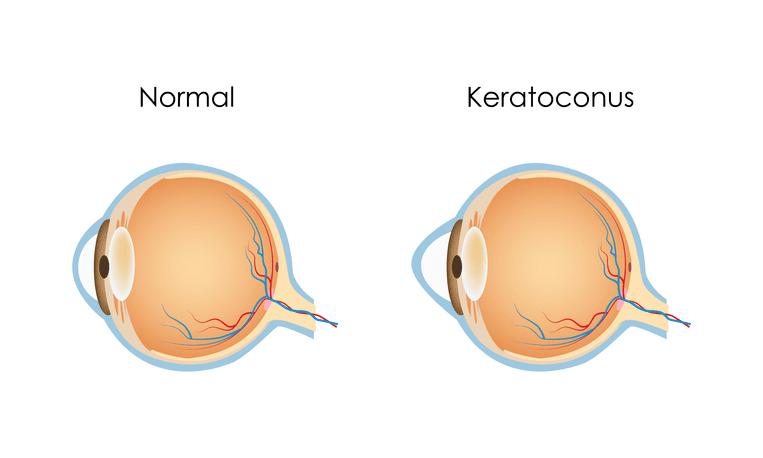
Irregular corneal shape can distort vision
Why Early Keratoconus Care Matters
- Keratoconus can progress gradually over time
- Delayed treatment may lead to worsening visual quality
- Early diagnosis helps guide the right management plan
- In progressive cases, corneal cross-linking may help slow or stop further progression

Keratoconus Treatment Options
Treatment depends on the stage of keratoconus, the rate of progression, and your current visual needs. Common goals are to slow progression and improve vision.

Corneal Collagen Cross-Linking (CXL)
Strengthens the cornea using riboflavin eye drops and UV light to help slow or halt progression. It is widely used for progressive keratoconus.

Special Contact Lenses
Rigid gas permeable, hybrid, or scleral lenses may improve vision when glasses are no longer enough.

Glasses in Early Stages
In mild cases, spectacles may still provide functional vision for some time.

Advanced Surgical Care
In severe or advanced cases, corneal transplant may be considered when other options are not enough.

Why Choose Pixel Eye Hospital?
Comprehensive keratoconus care under one roof
Advanced corneal mapping and diagnostics
Experienced cornea specialists
Stage-based personalized treatment plans
Cross-linking and visual rehabilitation options
Long-term monitoring and follow-up care
Keratoconus management often requires ongoing monitoring, because progression and treatment needs can vary from person to person.
How We Evaluate Keratoconus
Detailed eye examination
Corneal topography / corneal mapping
Vision and refraction assessment
Progression monitoring over time
Treatment suitability evaluation
Diagnosis and follow-up depend on careful assessment of corneal shape, visual changes, and progression pattern.
Meet Our Cornea Specialists

Dr. Abdul Rasheed
Cornea, Cataract, Refractive & Squint Surgeon
MD - AIIMS
 12 Years
 97%
97%
Dr. Krishna Poojita
Cataract and Refractive Surgeon, Cornea and Dry Eye Specialist
Director, Pixel Eye Hospitals | MBBS | DNB | MRCS | FICO | FPRS
15 Years97%
Frequently Asked Questions About Keratoconus

Protect Your Vision with Early Keratoconus Care


Call or WhatsApp
+7075008561
Available 9:00 AM – 6:00 PM
Visit Us
Pixel Eye Hospital, Hyderabad, India
